
Home » Commercial Property Loans » Industrial
Industrial Property Loans
We broker specialist industrial property loans from $500K to $100M+. Factories, industrial sheds, industrial estates, industrial strata properties, light industrial and more. 60% – 80% LVR. Free consultation.
Current rates, LVRs and loan structures for industrial property loans
Industrial property finance rates currently sit at 6.05% - 9.75% p.a. for established factories, tenanted industrial estates and light industrial premises with quality covenants. We typically see rates at the upper end of that range for older standalone factories, heavy industrial sites or properties with environmental considerations, while 6.05% is generally reserved for prime industrial estates in tier-1 markets with national tenants on long-term leases.
Last reviewed 5 May 2026.
- Interest rates 6.05% - 9.75% p.a.
- Loan term 1 - 30 years
- Repayment P&I or Interest-only
- Maximum LVR Up to 80%
- Typical LVR range 60% - 80%
- Deposit range 20% - 40%
- Loan range $500k – $100M+
- Settlement 17-28 days
- Lender panel 60+ specialist lenders
All information is general guidance only. Your actual rates and terms may differ from those on our commercial property loan interest rates page. Not financial advice. Please read our important disclaimer.
Types of industrial property we finance
We finance the full range of industrial real estate across Australia, from prime factories and multi-tenant estates to standalone sheds and individual strata units. Our 60+ specialist lender panel covers every industrial property type and ownership structure below.

Factories & production facilities
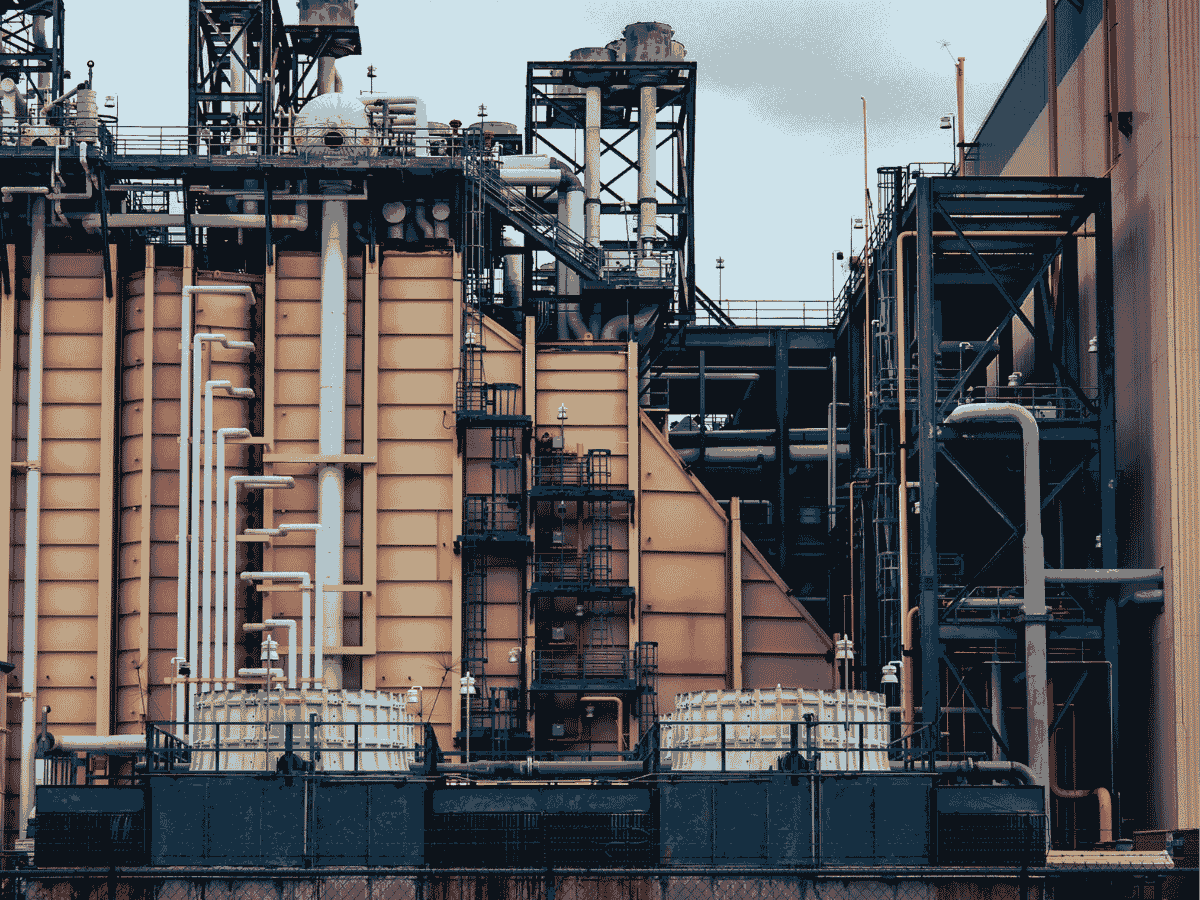
Purpose-built manufacturing premises with three-phase power, reinforced floor slabs and process-specific ventilation. Used by food processors, light manufacturers, fabricators and heavy industrial operators including foundries and chemical handlers. Larger and more specialised sites typically require Phase 1 environmental site assessments and attract more conservative lender treatment.

Industrial sheds & light industrial units
Standalone industrial sheds and multi-tenant light industrial complexes, typically 200 to 2,000 sqm with 6m+ clear span height and roller door access. The workhorse asset class for trades businesses, joiners, panel beaters, light assemblers and owner-operator workshops across metropolitan industrial precincts.
Industrial estates & strata units
Multi-unit industrial estates and individual strata-titled units across metropolitan industrial precincts. Strata units from 100 to 600 sqm suit first-time commercial buyers and SMEs upgrading from rental. Larger industrial estates with multiple tenancies on staggered lease structures offer investment-grade diversified income for passive industrial property investors.
Over 60 business lenders. One specialist broker.
Our lending panel includes major banks, regional banks, specialist non-bank lenders, and private credit providers, including lenders who only deal through accredited brokers directly.
Nadine Connell
Commercial Finance Broker
Owner-occupier, investor or refinancer: which industrial property loan pathway suits you?
Industrial property buyers typically fall into one of three pathways. Each shapes your lender pool, deposit position and structuring, whether you're a first-time buyer entering industrial through a strata unit or shed, an experienced operator expanding into a larger factory or multi-tenant estate, or refinancing an existing industrial property to better terms.
Attribute |
Pathway 01
Owner-occupier
|
Pathway 02
Investor
|
Pathway 03
Refinancer
|
|---|---|---|---|
What drives the application |
Your business operating from the property — purchase price and the property's fit for your trade, production or processing operations |
A tenanted industrial property with focus on yield, tenant covenant strength and lease structure |
Better pricing on an existing industrial property loan, equity release for business growth, or finding a new lender if your current one has exited |
What lenders assess |
Your business's trading position, serviceability and the property's operational fit including power, floor load and access |
Tenant covenant strength, lease structure, WALE, rent terms and net effective rent |
Current property valuation, fresh serviceability assessment and existing loan position |
Lender pool |
Commercial lenders plus SME business banking, with industry specialists for trade-specific operations and specialised industrial uses |
Property-focused commercial lenders, with sharper terms for quality tenants on long leases and multi-tenant estates |
Full specialist panel including non-bank lenders with appetite for refinancing legacy industrial loans on outdated rates |
Best suited for |
First-time owner-occupiers buying their first commercial premises and experienced operators expanding capacity. Manufacturers, fabricators, food processors and trades businesses across light and heavy industrial uses |
First-time commercial investors entering through strata industrial units or smaller standalone sheds, and experienced investors building diversified industrial portfolios with multi-tenant estates |
Existing industrial property owners reviewing legacy loans, or those releasing equity to fund business expansion or additional industrial acquisitions |
- What drives the application
- Your business operating from the property — purchase price and the property's fit for your trade, production or processing operations
- What lenders assess
- Your business's trading position, serviceability and the property's operational fit including power, floor load and access
- Lender pool
- Commercial lenders plus SME business banking, with industry specialists for trade-specific operations and specialised industrial uses
- Best suited for
- First-time owner-occupiers buying their first commercial premises and experienced operators expanding capacity. Manufacturers, fabricators, food processors and trades businesses across light and heavy industrial uses
- What drives the application
- A tenanted industrial property with focus on yield, tenant covenant strength and lease structure
- What lenders assess
- Tenant covenant strength, lease structure, WALE, rent terms and net effective rent
- Lender pool
- Property-focused commercial lenders, with sharper terms for quality tenants on long leases and multi-tenant estates
- Best suited for
- First-time commercial investors entering through strata industrial units or smaller standalone sheds, and experienced investors building diversified industrial portfolios with multi-tenant estates
- What drives the application
- Better pricing on an existing industrial property loan, equity release for business growth, or finding a new lender if your current one has exited
- What lenders assess
- Current property valuation, fresh serviceability assessment and existing loan position
- Lender pool
- Full specialist panel including non-bank lenders with appetite for refinancing legacy industrial loans on outdated rates
- Best suited for
- Existing industrial property owners reviewing legacy loans, or those releasing equity to fund business expansion or additional industrial acquisitions
What lenders look for in industrial property loan applications
Eligibility for industrial real estate loans turns on more than your credit history alone. Lenders underwrite both the property and the borrower position, so your background, the asset itself, and the structure of the income stream all factor into the assessment. Five factors drive most decisions, and the quick check gives an indicative view of where you sit across each one.
-
01
Deposit position Most industrial lenders expect 20–40% deposit, with established borrowers and prime industrial properties accessing the lower end. First-time investors or heavy industrial sites typically need a stronger deposit position alongside cleaner financials.
-
02
Borrower profile Owner-occupier deals lean on your business's trading position and operational fit. Investor deals draw on commercial property experience and balance sheet strength. Refinancers benefit from clean payment history and equity uplift on the existing property.
-
03
Property characteristics Three-phase power, reinforced floor slabs, clear span height and roller door access all factor into valuation and lender appetite. Properties in prime industrial precincts with clean environmental compliance typically attract better terms.
-
04
Income stream and serviceability For investors: tenant covenant strength, WALE, rent escalation, and net effective rent versus headline rent. For owner-occupiers: your business's serviceability and the property's operational fit for production, storage or trade use.
-
05
Compliance and credit history Clean credit history with no recent defaults, court judgments or current ATO arrears. For industrial specifically, clean environmental compliance matters as much as credit history. Historical contamination or unresolved site flags can stall otherwise straightforward deals.

Quick eligibility check
Five questions, takes about 30 seconds
Do you have a 20–40% deposit for your industrial property purchase?
This can be cash, equity in another property, or portfolio equity. First-time buyers or specialised industrial sites typically need more.
What type of industrial deal are you pursuing?
Different deal types have different lender pools, timelines, and assessment focus.
What's your borrower profile?
Lenders weigh your trading or investment background as a primary credit factor.
Where is the industrial property located?
Industrial precinct positioning shapes lender appetite and pricing materially.
What's the tenancy or use position?
Income stream stability is what lenders use to assess serviceability.
Industrial property finance assessment
Analysing your industrial property finance eligibility...
How industrial property loans work in Australia
An industrial property loan is a commercial mortgage secured against a factory, industrial shed, industrial estate, light industrial unit, or specialised processing facility. It's a discipline of its own within commercial property finance, with a different lender pool and different metrics than warehouse property finance or office and retail commercial lending.
An industrial property loan is three assessments running in parallel
When I write an industrial property deal, the lender runs three assessments in parallel, not one. Two industrial properties at the same purchase price can attract very different terms depending on environmental compliance, tenant covenant or borrower profile, even when the property looks identical on paper. How each assessment is presented determines the terms you actually win.
-
01
The property
Sets the ceiling
The lender's valuation determines maximum exposure. Location, clear span height, three-phase power, floor load capacity, and environmental site history all factor into what can be lent.
-
02
The income stream
Determines your position
How close to that ceiling you actually get. Tenant covenant and lease structure for investors, or business serviceability and operational fit for owner-occupiers.
-
03
The borrower
Decides who competes
Your profile shapes which lenders compete for the deal. Specialist industrial lenders, generalist commercial real estate lenders, non-bank specialists, and SME business banks each play different roles.
Environmental compliance and the cost of finding out late
In industrial property, environmental flags discovered at valuation can cost more than a poor credit score.
I see buyers move on industrial deals without ordering a Phase 1 environmental site assessment until after contracts are exchanged. The site looks clean, the price is right, the lender's preliminary indication is supportive. Then the valuation report flags a historical use concern, the lender requires a Phase 2 environmental site assessment, and what was a 4 to 6 week settlement turns into 12 to 20 weeks while soil and groundwater testing happens.
By that point the deposit is at risk, the LVR offer has been cut from 75% to 65%, and the deal economics have shifted materially. Some buyers walk away. Others accept terms they wouldn't have accepted at the start. The buyers who avoid this are the ones who order a Phase 1 ESA before they sign anything.
A Phase 1 ESA costs around $3,000 to $5,000 and takes 2 to 3 weeks. It's a desktop historical review of how the property has been used. Service stations, panel beating, dry cleaning, printing, chemical storage and metal fabrication all appear as red flags on Phase 1 reports. The buyers who win better terms are the ones who arrive at the lender with that report already in hand.
"In industrial property, the buyers who get the best terms aren't always the ones with the strongest balance sheets. They're the ones who order a Phase 1 environmental site assessment before they sign anything."
Nadine Connell

How the same industrial property looks under light versus heavy classification
A $5M industrial property purchase. Same building footprint, same location, same purchase price. The only variable is the intended use, and the resulting lender classification as light or heavy industrial. The numbers below are illustrative only and vary by deal, lender and specific use case.
What drives the $500K reduction?
- LVR cap by use classification Lenders cap LVR at 60% to 70% on heavy industrial use, down from 70% to 80% on light industrial. The cap reflects narrower resale markets and higher operational risk if the tenant vacates.
- Lender pool restriction Mainstream commercial lenders compete actively for light industrial. Heavy industrial deals often need specialist non-bank lenders, narrowing the pool from 30+ lenders down to a handful and typically lifting pricing 50 to 150 basis points.
- Environmental due diligence depth Phase 1 ESA is standard for both. Heavy industrial almost always triggers a Phase 2 ESA with soil and groundwater testing, adding 6 to 10 weeks to settlement and additional cost to the buyer's due diligence budget.
Numbers are illustrative for clarity. Real LVR and lender appetite depend on the property's specific operational use, location, and your borrower profile. The light versus heavy boundary isn't always black and white, and we often find a light industrial pathway for what looks on paper like heavy industrial use.
6 common mistakes industrial buyers make on property finance
These six issues come up repeatedly across industrial property finance deals. Each one can cost a buyer hundreds of thousands of dollars, or collapse an otherwise clean settlement. Here is how each mistake happens and what it actually costs.
Describing operational use too broadly on application
Lenders classify industrial property by specific operational use. Light manufacturing, food processing, heavy fabrication, distribution, storage and assembly all sit at different points on the LVR ladder. The classification drives lender appetite and underwriting assumptions from the first credit assessment.
Why it matters: A precisely described light industrial operation attracts the full mainstream lender pool at 75 to 80 percent LVR. A vaguely described 'general industrial' application defaults the lender to worst-case assumptions, which usually means a heavier classification and a 5 to 15 percentage point LVR reduction.
Putting 'industrial use', 'manufacturing', or 'general industrial' on the application without specifying the actual operations, the materials handled, and the production processes involved. The lender treats the deal as higher risk than it actually is.
What it costs: A 5 to 15 percentage point LVR reduction on a $5M property is $250,000 to $750,000 in extra deposit. Repositioning the application with proper operational detail typically adds 2 to 4 weeks to the approval timeline.
Assuming three-phase power and physical specs match operational needs
Industrial property specifications get inspected during valuation. Three-phase power capacity, floor load rating, clear span height, loading dock configuration and ventilation are all functional requirements that determine whether the property can support its intended operations. Lenders will not finance the gap between current specs and operational needs.
Why it matters: A property without sufficient three-phase power for the intended manufacturing process is functionally unsuitable for the buyer's business. The valuer flags the deficiency, the lender either declines or downsizes the loan, and the buyer either funds the upgrade post-settlement or restructures the deal.
Signing the contract on an industrial property without an electrician's confirmation of three-phase capacity, or a structural engineer's confirmation of floor load for heavy equipment. The deficiency surfaces during finance approval, not before contracts exchange.
What it costs: Power upgrades from single to three-phase run $30,000 to $80,000 plus connection lead times of 8 to 16 weeks. Structural floor upgrades for heavy equipment can exceed $150,000.
Folding plant and equipment into the property loan
Industrial property finance covers the building and land. Plant, machinery and operational equipment sit under asset finance, structured separately with different terms, security and lender appetite. Blending the two compromises both pieces.
Why it matters: Commercial property loans price at lower rates because the security is real property. Equipment depreciates faster than property, so folding equipment value into the property LVR calculation inflates the effective LVR against a depreciating security pool. Lenders either strip out the equipment value or lift the blended rate across the whole facility.
Asking the lender to include manufacturing equipment, racking, conveyors, or fit-out value in the property loan to avoid arranging separate finance. The intent is usually to simplify the borrowing, but the structure works against the borrower.
What it costs: A blended rate uplift of 0.5 to 1.5 percent across the combined facility, or a downsized property loan that leaves the buyer scrambling to finance the equipment separately at short notice.
Confusing personal and business serviceability on owner-occupier deals
Owner-occupier industrial buyers are assessed on business cashflow, not personal income. Lenders look at the business's net profit, BAS statements, tax returns, and historical revenue stability. The director's PAYG salary is a separate question entirely.
Why it matters: A trades business with strong revenue and modest director salaries can support a substantial property loan that a personal-income-only assessment would decline. Conversely, a director drawing a large personal salary from a thin business will not service an owner-occupier industrial loan no matter how comfortable the personal position looks.
Submitting personal tax returns and PAYG payment summaries as the income evidence for an owner-occupier industrial property purchase. The application gets assessed against the wrong income basis and the loan is downsized or declined.
What it costs: Borrowing capacity understated by $500,000 to $1.5M on a typical trades business property purchase, or weeks of delay re-submitting the application with the right business financials and BAS statements.
Skipping Phase 1 environmental site assessment before signing contracts
Phase 1 ESA is a desktop historical review of any prior industrial uses on the site that could have left contamination. Lenders increasingly require it for industrial property purchases. The timeframe to commission one before contracts exchange is typically 2 to 3 weeks at a cost of $3,000 to $5,000.
Why it matters: A clean Phase 1 ESA confirms standard industrial finance at standard pricing. A flagged Phase 1 triggers Phase 2 ESA, which is soil and groundwater testing taking 6 to 12 weeks and costing $15,000 to $50,000 or more. Most contracts will not accommodate that timeline after they have been signed.
Signing the purchase contract without Phase 1 ESA, then trying to commission it during the finance approval window. The contract settlement date arrives before Phase 2 ESA can complete, forcing extension negotiations, deposit risk, or settlement collapse.
What it costs: A best-case 4 to 8 week settlement extension, deposit at risk during the negotiation, or in worst cases a forfeited deposit if the seller will not extend.
Treating heavy industrial as light industrial on LVR expectations
Light industrial covers assembly, packaging, light manufacturing and distribution, and sits in the mainstream lender pool at 75 to 80 percent LVR. Heavy industrial covers chemical processing, foundries, smelters, paint shops, and anything with significant operational or environmental risk. Heavy classifications drop to 60 to 70 percent LVR and a narrower specialist lender pool.
Why it matters: The classification is operational, not just physical. A standard-looking industrial shed used for solvent storage classifies as heavy industrial regardless of its size or appearance. The 10 to 15 percentage point LVR gap between light and heavy classifications is structural and not negotiable through mainstream lender channels.
Estimating finance position based on building appearance. A 1,000 square metre shed looks like light industrial until lender review reveals the operational use classifies it as heavy. LVR drops, lender pool narrows, and the deposit position assumed at offer time becomes unworkable.
What it costs: A 10 to 15 percentage point LVR reduction on a $5M property is $500,000 to $750,000 in extra deposit required, or the deal restructures with specialist heavy-industrial lenders at premium pricing.
Estimate your industrial property loan borrowing power
An indicative calculation based on the figures you enter. Final terms depend on full lender assessment of the property, the income stream, and your borrower position.
How major banks, non-bank lenders and private capital differ for industrial property loans
For industrial property deals, the right lender depends on the operational use, the property type, your borrower profile, and how quickly you need to settle. Each lender category brings different LVR appetite, different tolerance for environmental flags and specialised assets, and different speed-to-approval characteristics.
Feature |
Major Banks
|
Non-Bank Lenders
|
Private Capital
|
|---|---|---|---|
Maximum LVR for industrial property |
Up to 80% on prime industrial, 70% standard |
Up to 80% with flexible criteria, often higher LVR on light industrial |
60 to 70% typical, asset-dependent |
Indicative rate positioning |
Standard industrial pricing, sharpest rates for prime deals |
Typically 50 to 150 basis points above major bank rates |
200 to 400 basis points above bank rates, deal-dependent |
Approval timeframe |
6 to 10 weeks |
4 to 6 weeks |
1 to 3 weeks |
Heavy industrial or environmentally flagged sites |
Conservative appetite, LVR drops 10 to 15 percentage points or declined |
Case-by-case with environmental remediation context |
Strongest appetite for complex industrial assets |
Construction or development finance |
Strong appetite for established developers, 65 to 75% LVR on land plus construction |
More flexible criteria, often used for first-time industrial developers |
Strong appetite for time-critical projects and complex builds |
Owner-occupier business banking pathway |
Established SME business banking programs, often integrated with property finance |
Case-by-case via specialist business lenders |
Rare |
Loan term |
Up to 30 years |
Up to 25 years |
1 to 5 years typical, refinance to standard at maturity |
Best suited for |
Established borrowers buying standard industrial in prime corridors |
First-time investors, mixed-use deals, owner-occupier deals where banks pull back, heavier industrial properties |
Time-critical settlements, complex industrial assets, environmentally flagged sites, deals outside standard lending criteria |
Ready to apply? Book a free consultation with Nadine
A 30-minute discovery call. No obligation. We can usually give you an indicative LVR and rate in the first call.
- 1 Consultation. We review the property, your borrower profile, and the deal numbers.
- 2 Market approach. We approach the lenders most likely to write your deal at the best LVR and rate.
- 3 Your options. You compare offers, choose, and we manage through to settlement.
Industrial property finance questions, answered
The questions buyers most often ask me about industrial property finance in Australia.
Eligibility and deal qualification
What types of industrial properties can be financed?
An industrial property loan covers a wide range of property: factories, manufacturing facilities, light industrial sheds, fabrication workshops, food processing plants, manufacturing-and-distribution hybrids, strata industrial units, and multi-tenant industrial estates. I write finance across all of these sub-types, and each one has different lender appetite.
In practice, light industrial properties (assembly, packaging, light manufacturing, distribution) sit at the top of the LVR ladder with the full mainstream lender pool competing. By contrast, heavy industrial (chemical processing, foundries, paint shops, specialised manufacturing) drops to specialist lenders at lower LVRs and premium pricing.
For storage and logistics specifically, our warehouse property loans page covers that category in detail. The commercial property loans hub covers the full category spectrum.
Can I buy a vacant industrial property with finance?
Yes, but the structure changes. Vacant industrial properties don't generate the income stream lenders prefer to underwrite against, so the application leans on alternative evidence. The three approaches I see most often:
- A forward-leasing strategy with credible tenant interest documented.
- An owner-occupier business case where the buyer is moving their own operations into the property.
- A stronger borrower position (lower LVR, larger deposit, proven property portfolio) to offset the lack of in-place income.
Major banks have limited appetite for vacant industrial without one of those structures. Non-bank specialist lenders and private capital are more flexible but price for the additional risk. If you're considering a vacant purchase, book a free consultation to talk through the deal.
Do I need an established business to buy industrial as an owner-occupier?
Not necessarily, but the application looks different. Established businesses with two to three years of trading history get the strongest treatment because lenders can assess serviceability against actual cashflow.
First-time owner-occupier buyers typically face slightly tighter LVRs and need to provide a defensible business plan with forward forecasts. If your business is still in start-up phase, the application becomes a hybrid: part property finance, part business case. Several lenders I work with write these deals when the business plan stacks up and the property is well-located.
Whether you're buying as an owner-occupier running your business from the property, or as an investor leasing to a tenant, the lender pool and treatment shifts. If you're weighing whether to buy your premises or continue leasing, our buy vs rent calculator compares the long-term economics.
Loan structure and LVR
What LVR can I expect when financing industrial property?
Industrial LVRs typically sit at 60% - 80%, depending on deal type and your borrower position. Within that range, lender appetite varies significantly by property sub-type:
- Factory or standalone industrial (owner-occupier): up to 80%
- Factory or standalone industrial (investor): up to 75%
- Light industrial sheds: up to 75%
- Industrial estates (multi-tenant): 70-80% depending on tenant covenants
- Strata industrial units: 70%
- Heavy industrial or specialised: 60-70% with specialist lenders
- Vacant industrial: 50-65% with non-bank or private lenders
Owner-occupiers consistently access 5-10 percentage points higher LVR than investors on equivalent properties. The factors I see moving LVR up or down most often are tenant covenant strength (for investors), operational fit (for owner-occupiers), and environmental compliance.
Use our commercial property repayment calculator to estimate your indicative loan position, and our commercial property loan interest rates page covers current pricing across categories.
Can I borrow for plant and equipment alongside the property loan?
Yes, but it's almost always structured as separate finance. Industrial property loans cover the building and the land. Plant, machinery, racking, conveyors, and operational equipment sit under equipment finance, with different terms, security and lender appetite.
The reason I structure these separately: commercial property loans price at lower rates because the security is real property. Equipment depreciates faster than property, so folding equipment value into the property LVR calculation inflates the effective LVR against a depreciating security pool. Lenders either strip out the equipment value or lift the blended rate across the whole facility.
For broader business cashflow needs around the property purchase, our business loans range covers complementary structures: equipment finance for plant and machinery, working capital loans for operational ramp-up after settlement, and invoice finance for receivables-backed cashflow.
Are interest-only periods available on industrial property loans?
Yes. Major banks typically cap interest-only at three years, non-bank specialist lenders extend to five years, and private capital can sometimes structure full-term interest-only. The buyers I see structure this way are usually protecting cashflow during the early ownership period, especially when fit-out, business ramp-up, or a vacancy gap between settlement and tenant moving in is planned.
The trade-off is higher overall interest cost across the loan term. Our commercial property loan types page covers different structures available across the product range.
Property and operational considerations
What's the difference between light and heavy industrial classification for finance purposes?
This is one of the most important distinctions in industrial finance, and it's operational, not just physical. The classification drives both the LVR cap and which lenders will even consider the deal.
- Light industrial covers assembly, packaging, light manufacturing, distribution, and storage. These sit in the mainstream lender pool at 75-80% LVR.
- Heavy industrial covers chemical processing, foundries, smelters, paint shops, and any operation with significant environmental or operational risk. These drop to 60-70% LVR with a narrower specialist lender pool and premium pricing.
The point that catches buyers out: a standard-looking industrial shed used for solvent storage classifies as heavy industrial regardless of size or appearance. The 10-15 percentage point LVR gap between classifications is structural and not negotiable through mainstream channels.
For broader market context across industrial corridors and lending conditions, our commercial property market insights cover the wider category.
Why is Phase 1 environmental site assessment important?
For industrial property purchases, Phase 1 ESA is fast becoming a non-negotiable part of due diligence. It's a desktop historical review of any prior industrial uses on the site that could have left contamination. The timeframe is 2-3 weeks at a cost of $3,000-$5,000.
Why it matters before contracts exchange: a clean Phase 1 unlocks the full mainstream lender pool at standard pricing. A flagged Phase 1 triggers Phase 2 ESA, which is soil and groundwater testing taking 6-12 weeks and costing $15,000-$50,000 or more. Most contracts won't accommodate that timeline after they've been signed.
I see this go wrong when buyers commission Phase 1 during the finance approval window instead of before exchange. The settlement date arrives before Phase 2 ESA can complete, and the deal either extends, the deposit comes under risk, or the seller walks. The National Environment Protection (Assessment of Site Contamination) Measure is Australia's national guidance document on site contamination, worth reviewing before any industrial site purchase.
Process and documentation
How long does industrial property finance typically take?
Realistic timeframes vary by lender:
- Major banks: 6 to 10 weeks
- Non-bank specialist lenders: 4 to 6 weeks
- Private capital: 1 to 3 weeks
The biggest accelerators are clean documentation, a complete Phase 1 ESA ready at submission, and an existing relationship with one or more lenders I already know are writing your deal type.
The biggest delays come from environmental flagging triggering Phase 2 ESA, body corporate documentation gaps on strata industrial purchases, valuation lead times for specialised facilities, and operational use classifications that aren't clearly described in the application. The detailed step-by-step is in the how to apply section above.
What documentation will I need for an industrial finance application?
An industrial property loan application typically requires two sets of documents.
On the property side, I'll need:
- The sale contract
- The lease agreement and tenant covenant details (for investor purchases)
- Strata or body corporate documentation (for strata industrial units)
- A Phase 1 environmental site assessment
- A recent specialist property valuation
- Floor plans showing operational layout and physical specifications (three-phase power, floor load rating, clear span height)
On the borrower side, lenders want to see:
- A personal financial statement
- Two years of personal tax returns
- Existing entity financials and 2+ years of BAS statements (for owner-occupier deals)
- A forward business plan with cashflow forecasts (for owner-occupier) or a property portfolio summary (for investor)
- Identification and ASIC company extracts where companies are involved
The exact list varies by deal type, lender, and complexity. I provide a tailored documentation checklist once we've had an initial conversation about your specific scenario. Book a free consultation to get started.
Have a question? Just ask
Book a free, no obligation chat with our commmercial lending experts, or call 1300 262 098 to speak to our team.