
Sydney Commercial Property Loans

Sydney commercial property loans from $500K-$100M+.

Specialist finance brokers, 60+ lenders. LVR’s from 60% – 90%. All Sydney metro and regional areas – CBD, Inner West, North Shore, Western Sydney, Eastern Suburbs, Southern Districts. 

Sydney commercial property loans
Commercial Property Locations

Sydney Commercial Property Loans — Overview

(Last reviewed 1 April 2026)
Nadine Connell — Commercial Finance Broker
Written & reviewed by · Specialist in Sydney commercial property finance — owner-occupier, investor & SMSF
MFAA Member CR 553930

Current Rates

  • Rates From: 6.05%
  • Rate Range: 6.05% - 10.15%
  • Market: Premium Markets NSW Metro

LVR & Lending

  • LVR Range: 60% - 90%
  • Max LVR: 90% (select lenders)
  • Min Loan: $500,000

Our Service

  • Lender Panel: 60
  • Approval Time: 7-28 days
  • Loan Terms: 1 - 30 years

Why lender selection defines your Sydney deal

The Sydney commercial property market is the deepest and most competitive in Australia. Specifically, industrial vacancy across South Sydney and the inner west sits below 2%. Meanwhile, the Parramatta CBD is the strongest non-CBD office market in the country. Furthermore, Western Sydney’s logistics corridor — anchored by the Badgerys Creek airport precinct — is attracting occupier demand that is running well ahead of completed stock.

The catch is that this market is unforgiving of a poorly structured application. As a result, Sydney’s premium price points mean LVR calculations are tighter and valuations can land below purchase price, particularly on CBD fringe and mixed-use assets. That is why getting the right lender behind the right asset from the start is what separates a clean approval from a deal that stalls for months.

I have been helping my clients arrange commercial property finance in Sydney since 2009. Consequently, as a specialist Sydney commercial property broker, I know which lenders are genuinely active in this market right now, which ones price Sydney assets correctly, and which ones will slow your deal down.

Book a free 30-minute consultation, or call 1300 262 098.

Book Your Free 30 Minute Phone Consultation With Nadine Here
Why Sydney is Australia's most active commercial property lending market: The deepest industrial investment volumes of any city in the country, premium CBD office supply set to hit a structural floor, and capital values across the Sydney industrial market already turning upward.
$3.9B
Sydney industrial investment — year to date (Sept 2025)
106 transactions with an average sale price of $36.8 million — reflecting sustained institutional and private investor appetite across Western Sydney and inner south-west precincts
Colliers Australia
5%
Forecast annual premium CBD office rental growth
Only three major CBD completions of more than 25,000sqm by 2029 — with 65% already pre-committed, just 57,000sqm of new premium space remains available before 2027, creating a structural supply shortage
Knight Frank Australia
3.1%
Sydney industrial capital value growth — 12 months to Dec 2025
Industrial asset values leading the commercial property recovery — yields compressing in Sydney with Knight Frank forecasting the market to broaden and strengthen throughout 2026
Knight Frank Australia

Sydney Commercial Property Lending Precincts

Sydney is not a single commercial market — it is six distinct precincts, each with its own lender appetite, risk profile and finance structure. After 15 years arranging commercial property loans across Sydney, the precinct you are buying in is one of the first things I look at. Consequently, lender selection and application strategy differ significantly from one Sydney suburb to the next. Select your precinct below.

CBD & City Fringe
Common property types
Premium strata office, freehold mixed-use, retail
Core CBD prime face rent
$1,538/sqm — and forecast to rise

The Sydney CBD Core is where lender selection matters most and where the consequences of a poorly structured application are most severe. Premium assets in the Walsh Bay, Core and Midtown precincts are attracting genuine institutional competition, with Knight Frank forecasting average rental growth of 5% per year for premium space — driven by a supply pipeline that delivers fewer than three major completions above 25,000sqm before 2029, with 65% already pre-committed.

The challenge for borrowers is that the same premium fundamentals that attract investors also attract the most conservative LVR assessments from mainstream lenders. A CBD strata office or city fringe mixed-use asset above $3 million will typically be assessed on a very different basis than the same dollar amount of suburban commercial. The valuation methodology, the lender's internal CBD exposure limits, and the asset's mixed-use classification all interact in ways that a generalist application simply does not account for. I have seen strong CBD assets declined or undervalued at the lending stage simply because the application did not address the precinct's specific risk factors directly.

City fringe — Surry Hills, Pyrmont, Alexandria and the inner creative precincts — presents a different challenge. Mixed-use freehold assets with retail below and office or residential above are common here, and the classification of the asset determines the entire finance structure. Getting that wrong at the application stage can cost you the deal. If you are buying in the CBD or city fringe, call me before you make an offer. Understanding the finance position first is the only way to negotiate with confidence.

North Sydney & North Shore
Common property types
Strata office, freehold commercial, retail
Metro impact
Commuter numbers up 25% since Sydney Metro opened

North Sydney has been one of the most actively discussed non-CBD office markets in the country over the past 18 months — and for good reason. The opening of the Victoria Cross and North Sydney Metro stations lifted commuter numbers by 25% compared to 2023 and 2024 levels, and CBRE's leasing team reported that it directly drove an uptick in large enquiries above 5,000sqm. That kind of demand signal reshapes a market's risk profile for lenders — and I have seen it translate into improved finance terms for quality North Sydney assets over the past two years.

For owner-occupying professional services firms — technology companies, financial services businesses, legal and consulting practices — North Sydney offers genuine value relative to CBD pricing, with improving amenity and dramatically better commute times for North Shore staff. Strata office here suits professional businesses that want a recognised Sydney business address without bearing the full cost of a Core CBD transaction. The owner-occupier LVR advantage applies fully, and the precinct's tenant demand profile is well understood by the specialist lenders I work with.

The upper North Shore — St Leonards, Chatswood, Macquarie Park — represents a different opportunity profile again, anchored by hospital precincts, university campuses and technology occupiers. For healthcare practitioners in the St Leonards or Royal North Shore corridor, dedicated healthcare property finance programmes are available here — the same programmes available near major hospitals, applied to the North Shore's strong and growing medical precincts. If you are a practitioner in this corridor who has been leasing for several years, the case for ownership is worth reviewing now.

Parramatta & Greater West
Common property types
CBD office, strata, service commercial, medical
Market status
Strongest non-CBD office market nationally

Parramatta is genuinely the most significant commercial property opportunity in Western Sydney right now — and I say that with a panel of 60+ specialist lenders who have become progressively more active here over the past three years. As Australia's strongest non-CBD office market, Parramatta has benefited from major government agency anchors, growing private sector occupier demand, and infrastructure investment that now includes Metro access, light rail, and improved motorway connectivity. These are the demand drivers that give lenders confidence in the long-term income case — and that confidence flows through to the terms I can access for my clients.

The Parramatta market suits two distinct buyer profiles I work with regularly. The first is the owner-occupying professional firm that has outgrown suburban premises and wants to consolidate into a recognised Western Sydney CBD address — government agencies, financial services firms, healthcare operators and professional services businesses are all active here. The second is the SMSF investor seeking a quality commercial tenant with a long lease in a genuine growth corridor. For either profile, SMSF limited recourse borrowing can be a compelling structure at Parramatta's price points — and the precinct's fundamentals are exactly what SMSF lenders want to see.

Further west — Blacktown, Penrith, Campbelltown, Liverpool — I see consistent owner-occupier activity from service commercial, healthcare and trade-related businesses expanding their footprint ahead of Western Sydney's population growth curve. If you are buying service commercial or strata office in Greater Western Sydney, the specific suburb and its proximity to infrastructure investment will significantly affect which lenders I approach and what terms are available. That context shapes the application from the first conversation.

Western Sydney Industrial
Common property types
Warehouse, logistics, manufacturing, strata industrial
Investment volumes (YTD Sept 2025)
$3.9B nationally — Western Sydney driving the majority

Industrial is consistently one of the cleanest finance categories I work with, and Western Sydney — Eastern Creek, Wetherill Park, Erskine Park, Kemps Creek and the Badgerys Creek airport logistics corridor — is where the most significant industrial investment in the country is concentrated right now. Colliers recorded $3.9 billion in national industrial investment transactions in the year to September 2025 across 106 deals, with Western Sydney precincts driving the largest share. Super prime net face rents rose 6% year-on-year. These are the fundamentals that give specialist lenders real confidence in this corridor.

For owner-occupiers — logistics operators, 3PL businesses, food and beverage manufacturers, distributors and e-commerce operators — I can access industrial property finance terms that are materially better than what most clients receive from their existing bank. Owner-occupied industrial, where your business operates from the premises, is assessed very differently from investment industrial. That distinction alone can shift your LVR by 5–10 percentage points. If you have not specifically asked your lender about owner-occupier industrial pricing, you are almost certainly not receiving the best available terms.

One important nuance in this corridor: there is a meaningful difference between the Outer West (Kemps Creek, Eastern Creek) and the established infill precincts. New speculative stock in the Outer West has pushed vacancy higher in that sub-market, while established infill precincts remain significantly tighter. Lenders see that difference clearly — and the wrong precinct selection can affect your terms even when the asset fundamentals are otherwise identical. Before you make an offer on a Western Sydney industrial property, call me. The finance position needs to be assessed against the specific precinct, not the corridor as a whole.

South Sydney & Inner West
Common property types
Infill industrial, strata industrial, showroom
Inner West vacancy
Trending down — one of only two Sydney precincts to tighten

South Sydney and the Inner West industrial market is structurally different from every other Sydney precinct, and lenders who understand it price it accordingly. JLL's Q4 2025 research identified the Inner West as one of only two Sydney precincts where industrial vacancy actually decreased over the quarter — in an environment where most precincts were rising. The reason is straightforward: there is no land to develop here. Infill industrial in South Sydney and the Inner West is genuinely constrained supply, and that constraint is permanent. That is a very different risk profile from a corridor where new speculative stock can change the vacancy picture within 12 months.

For owner-occupying businesses in these precincts — trades contractors, food producers, equipment suppliers, importers and distributors who depend on proximity to the CBD and port — the case for ownership rather than leasing has rarely been stronger. Rental growth in South Sydney has led the Sydney market, and occupiers who have been waiting for prices to ease have largely been disappointed. Industrial property finance for strata units in this corridor — typically 200–600sqm — is a category I handle regularly, and the owner-occupier terms available here consistently outperform what clients expect going in.

For investors, South Sydney and Inner West strata industrial offers exactly the long-term income and capital growth profile that SMSF lenders favour — genuine scarcity, strong occupier demand, and a tenant base with limited relocation options. If you are a trustee considering a SMSF limited recourse borrowing arrangement and industrial property is on your shortlist, this is the Sydney sub-market I would look at first. The fundamentals are the strongest of any industrial precinct in the country for this type of strategy.

Eastern Suburbs
Common property types
Medical strata, retail freehold, boutique office
Buyer profile
Owner-occupying practitioners and retail freehold investors

The Eastern Suburbs commercial market is one I approach carefully — not because the fundamentals are weak, but because the gap between what a property is worth to the right buyer and what a lender's valuer will support can be significant here, particularly for premium retail freehold and boutique commercial assets in Double Bay, Woollahra, Paddington and Bondi Junction. Premium coastal and village strip retail in this corridor attracts a depth of buyer demand that general commercial valuations often fail to capture. Getting a valuer who understands the market, and a lender whose credit team is familiar with Eastern Suburbs commercial, is the difference between a smooth transaction and a frustrating one.

The strongest and most consistent deal category I handle in the Eastern Suburbs is healthcare. The corridor from Bondi Junction through to Randwick — anchored by Prince of Wales Hospital, Sydney Children's Hospital and the University of New South Wales — generates steady demand for medical consulting suites, specialist rooms and allied health strata. Dedicated healthcare property finance programmes are available for qualifying owner-occupiers here, offering LVRs that mainstream commercial lending simply does not match. If you are a practitioner buying within the Randwick health and education precinct, this is the lender category I approach first — not a standard commercial bank.

For retail freehold investors in this corridor — long-tenanted strip retail in Paddington, Double Bay or Bondi — the asset quality is typically excellent and the tenants are well-established. The challenge is that mainstream lenders applying national retail policies to Eastern Suburbs freehold consistently undervalue the location premium. My job is to place your application with a lender who understands why a well-tenanted Double Bay retail freehold is a fundamentally different risk proposition to a suburban strip retail investment — and price it accordingly.

Get started

Let’s get the commercial finance you need.

Nadine Connell, Commercial Finance Broker, Smart Business Plans

Nadine Connell
Commercial Finance Broker

Commercial Property Loan Rates in Sydney

Sydney commercial property loan rates start from 6.05% p.a. — and because Sydney is assessed as Australia's deepest commercial lending market, the headline rates available here are genuinely competitive. However, the gap that catches buyers out is not usually the rate itself. Rather, it is whether the application is structured correctly for the asset, the precinct and the borrower profile — and in a market where the difference between a well-presented and a poorly-presented application is often measured in months rather than weeks, that is where a specialist broker changes the outcome.

Why Your Bank's Commercial Rate Is Rarely Their Best Offer

Major banks in Sydney quote commercial property rates based on a standard credit assessment that does not differentiate between a Western Sydney logistics warehouse, a Parramatta CBD office, an Eastern Suburbs retail freehold and a North Sydney strata suite. In fact, each of those assets carries a fundamentally different risk profile — and specialist lenders price that difference. That's why your bank's first quote is their standard rate. It is rarely the best potential rate available.

Because I work across a panel of 60+ specialist lenders, I can match your specific asset, precinct and borrower profile to the lender whose credit appetite genuinely suits it — not just the lender whose relationship manager picks up the phone first. In a market as active as Sydney, that matching process routinely produces better rates, higher LVRs and faster approvals than a direct bank application.

The Four Factors That Move Your Sydney Commercial Rate

Sydney's commercial property market has more precinct and asset-type variation than any other city in Australia. Two buyers transacting on the same day at similar price points can receive materially different rates — based entirely on how their deal is structured and presented. Before you approach any lender, these are the four factors I assess first.

01

Asset type, precinct and lender exposure limits

A South Sydney infill industrial property with an established logistics tenant is assessed entirely differently from a CBD Core strata office, a Parramatta mixed-use freehold or a Western Sydney speculative warehouse. As a consequence, lender appetite varies sharply by precinct and asset class in Sydney — and most lenders have internal exposure limits by suburb and postcode that are never published. I know which lenders are genuinely active and competitive across each Sydney precinct right now, including those that understand the Western Sydney airport logistics corridor rather than applying a regional discount to it.

02

Owner-occupier vs investment

If your business will occupy the premises, you qualify for owner-occupier lending — which consistently achieves better rates and higher LVRs than investment lending on the same property. At Sydney's price points, this distinction has a greater dollar impact than in any other Australian market. It's particularly important for professional services firms buying in North Sydney or Parramatta, healthcare practitioners purchasing near the Randwick or Royal North Shore precincts, and logistics operators buying in Western Sydney. Many buyers do not realise how significantly this classification shifts the numbers until they see both scenarios side by side.

03

Valuation risk on premium and mixed-use assets

Sydney's premium price points create a valuation risk that does not exist at the same scale in other Australian markets. If you're focused on the CBD fringe and mixed-use assets, valuations can land below purchase price — particularly where the purchase price reflects a location premium that a standardised commercial valuation methodology does not fully capture. As a result, the lender you approach, and how the asset is classified in the application, directly determines whether your valuation supports your purchase price or undermines it. That's why addressing this risk before the application is submitted — not after the valuation comes in — is one of the most valuable things I do for my Sydney clients.

04

Lease profile and vacant possession

A fully leased Sydney asset with a government agency, national retailer or listed company on a long WALE is assessed at the most favourable end of the lending spectrum. In contrast, vacant possession — particularly for owner-occupiers — requires a different lender approach entirely, with a stronger focus on business serviceability rather than rental income. That said, both are entirely financeable; the applications look very different, and sending a vacant possession deal to a lender whose credit team is built around income-producing assets is one of the most common reasons Sydney commercial deals stall or come back with terms far below what was available.

Current Sydney commercial property loan rates range from 6.05% - 10.15% p.a. For a full national rate comparison by loan and property type, visit our commercial property interest rates page.

Book a free consultation
Client Story

The Bank Priced the Deal as if the Metro Didn't Exist. The Right Lender Understood What North Sydney Had Become.
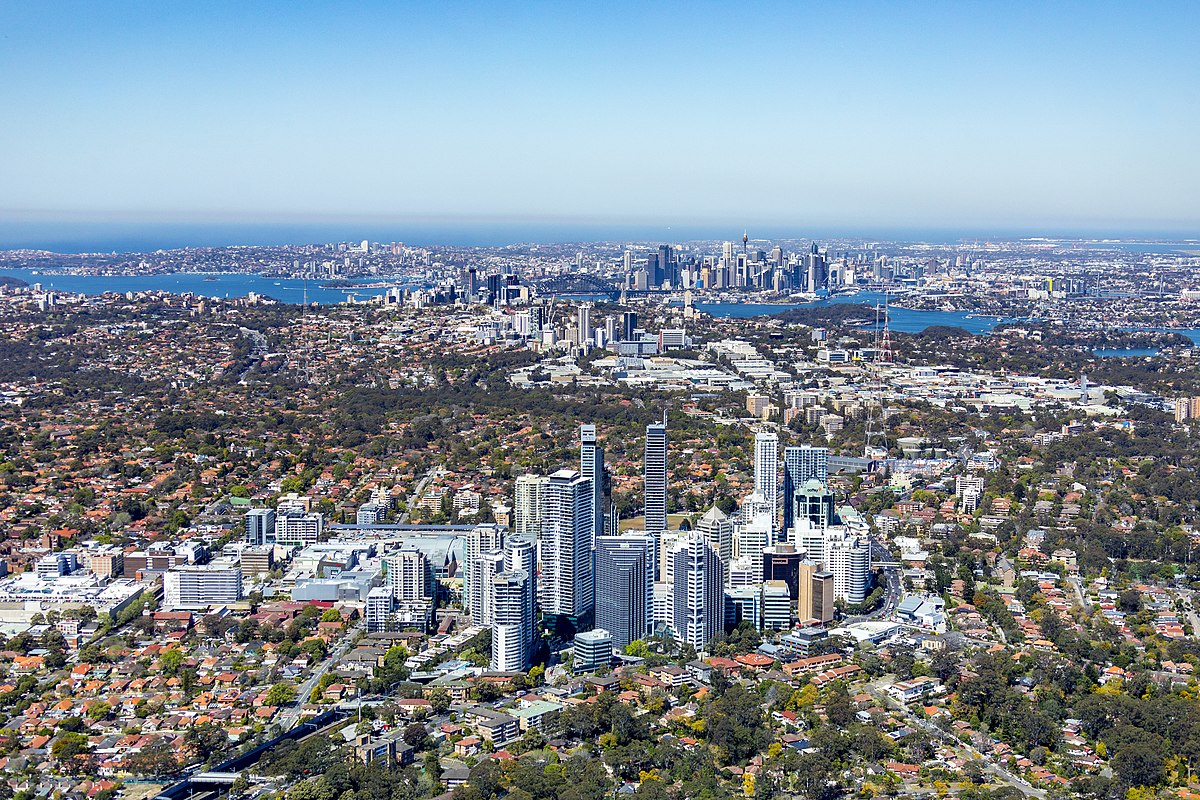
North Sydney commercial property loan — strata office financed through Smart Business Plans specialist commercial finance broker
75% LVR approved
6.15% Rate secured
11 days To formal approval
$0 Personal assets at risk

Mei Chen ran a mid-sized financial planning practice out of leased space in the CBD for nine years. When a 310m² strata office suite on the upper floors of a Miller Street building in North Sydney came to market at $2,650,000 — quality fitout, 180-degree harbour views, 150 metres from the Victoria Cross Metro station — she moved quickly. Her bank came back with a 60% LVR and a rate that reflected its standard CBD-adjacent office policy. The application showed no awareness that North Sydney was a different market in 2024 than it had been in 2021. Mei contacted us two days later.

The bank's credit assessment was not wrong about the asset. It was wrong about the market. The Victoria Cross and North Sydney Metro stations had opened in 2024. Commuter numbers were up 25% compared to the prior year. CBRE's leasing team was recording an uptick in 5,000sqm+ enquiry — the first meaningful large-format demand signal the precinct had seen since the pre-COVID cycle. The bank's model had been calibrated on a North Sydney that no longer existed. That timing gap — between a market that has already moved and a credit model that has not caught up — is exactly where the right lender makes the difference.

The Challenge

The bank's 60% LVR quote would have required Mei to contribute $1,060,000 in cash on a $2,650,000 purchase. Her available capital was $750,000 — which meant she was $310,000 short on their terms, and the deal was dead at those numbers. More frustrating than the shortfall was the rate itself, which reflected a standard office policy rather than the owner-occupier premium her situation clearly warranted. Mei's practice would occupy the entire suite. She was not an investor seeking rental income — she was a business owner eliminating a rent expense and building equity in her firm's own premises. That distinction is fundamental to how specialist lenders assess commercial owner-occupier transactions, and the bank's application had not been structured to reflect it.

There was a second issue sitting underneath the LVR. The bank's valuation instruction had gone to a generalist valuer applying a broad North Sydney office methodology — the kind that averages across the whole precinct rather than differentiating between Miller Street stock with Metro proximity and secondary buildings further from the station. At $2,650,000 for 310m², the purchase price was at the upper end of recent comparable transactions in the precinct. A generalised valuation methodology carried real risk of landing below purchase price — which would have compressed the effective LVR further, regardless of what the bank had quoted upfront. Addressing the valuation risk before submission was as important as fixing the LVR.

What We Did Differently

The first filter I applied was which lenders in our panel both understood the North Sydney office market specifically and had an active, competitively priced owner-occupier office product. Those are genuinely separate criteria. Several lenders who price Sydney CBD office well apply a non-CBD loading to North Sydney that specialist lenders do not — because they treat it as a secondary market rather than recognising it as a structurally improving precinct with direct Metro access to the CBD. I know which lenders have updated their North Sydney credit appetite and which ones have not. That knowledge alone narrows the field significantly.

I presented Mei's application around four things the bank's assessment had underweighted. First, the owner-occupier classification and the business serviceability case — Mei's practice had twelve years of trading history, strong recurring revenue from an established client base, and no material debt. The capacity to service the loan from business income was unambiguous, and I made sure that case was presented clearly rather than buried inside a standard commercial application template. Second, the Metro proximity and what it meant for North Sydney's occupier demand trajectory — not as a narrative observation, but as a documented market position supported by CBRE's leasing data on commuter uplift and enquiry volumes. Third, the valuation risk — I briefed the lender upfront on the purchase price, identified the comparable transactions that supported it, and recommended a valuer with specific North Sydney experience rather than allowing a generalist instruction to create a shortfall on settlement day. Fourth, the specific characteristics of the suite itself — upper floor, harbour views, quality fitout, walkable distance to Victoria Cross station — which are the features that support premium pricing in this precinct and which a standardised valuation methodology can underweight.

We submitted to two specialist lenders in our commercial property finance panel. The first came back with a formal approval at 75% LVR and 6.15% — owner-occupier pricing, not standard office investment pricing — within eleven business days of submission. The valuation came in at purchase price. Mei's total cash requirement on settlement was $662,500, comfortably within her available capital with a buffer retained in the business.

The Outcome

Mei's practice settled on the Miller Street suite and has occupied it since. The rent that was leaving the business every month is now building equity in an asset she owns. At the rate secured, the total interest cost over the life of the loan is materially lower than the bank's initial quote — a difference that compounds significantly over a fifteen-year term at a $2,650,000 principal.

The broader point is about timing. North Sydney's repricing had already begun before Mei's purchase — the Metro was open, the commuter numbers were already moving, and CBRE was already recording the enquiry uplift. The bank's model simply had not caught up with what was happening on the ground. That gap between a market that has moved and a credit model that has not is not unusual in Sydney — it happens at every stage of a precinct's cycle. It is also where the right broker adds the most value, because knowing which lenders have updated their view of a market is not information you can find on a rate sheet.

The bottom line: A mainstream bank priced Mei's North Sydney strata office purchase using a pre-Metro credit model that did not reflect what the precinct had become. The right specialist lender — one that understood both the owner-occupier distinction and North Sydney's improving fundamentals — approved at 75% LVR and 6.15% in eleven business days, with a valuation that supported the purchase price in full.

"I had resigned myself to the bank's number. Nadine explained exactly why the bank's assessment was wrong and what a correctly structured application would look like. The difference in cash required on settlement was over $300,000. That is not a small thing."

Client details have been anonymised. This story reflects a real scenario arranged through Smart Business Plans. Individual results vary depending on circumstances, lender criteria and market conditions. Commercial property lending involves credit assessment by the lender — approval is not guaranteed. Smart Business Plans are Authorised Representatives of Loan Market Services Pty Ltd (ACL 517192).

Our Lender Panel for Sydney Commercial Property Finance

60+ specialist lenders on our panel
Major Banks Non-Bank Specialists SMSF Lenders Medical Finance Construction Lenders Private Credit

Including all four major banks, specialist non-banks, SMSF lenders and medical finance specialists. Sydney is Australia's deepest commercial lending market — and lender appetite varies more sharply by precinct and asset class here than anywhere else in the country. For every Sydney deal, I match your asset, precinct and borrower profile to the lenders most likely to approve at the best available terms.

Find the lender set for your deal:

Industrial & Owner-Occupier Lenders

Best for: Western Sydney logistics corridor, South Sydney and Inner West infill industrial — owner-occupying logistics operators, manufacturers and trade businesses

Owner-occupied industrial is assessed on business serviceability — not rental yield — which opens a materially more favourable lender set. These specialists understand the difference between the land-constrained Inner West infill market and the outer western precincts where new speculative supply has changed the vacancy picture. Getting that distinction right in the application directly affects your LVR and rate.

Industrial property finance →

SMSF Specialist Lenders

Best for: SMSF trustees buying owner-occupied premises — strata office in Parramatta, North Sydney or the city fringe, and medical suites in the Randwick and North Shore health precincts

Most lenders list SMSF as a product but apply standard commercial criteria. Our SMSF sub-panel specifically understands LRBA structures and consistently approves at 70% LVR on suitable Sydney assets — including the strata office and medical suite formats most common for SMSF trustees in this market.

SMSF commercial property loans →

Medical & Healthcare Lenders

Best for: AHPRA-registered practitioners buying consulting suites, specialist rooms and day surgery facilities in the Randwick, Royal North Shore, Westmead and Macquarie Park health precincts

Purpose-built medical lending carries LVRs up to 95% for registered practitioners — no standard commercial risk loading, no premium location penalty. Sydney's hospital and university health precincts generate some of the strongest anchor demand in the country, and lenders who understand these corridors assess risk very differently from standard commercial credit teams.

Medical property finance →

CBD, Office & Mixed-Use Lenders

Best for: CBD Core and city fringe strata office, North Sydney and Parramatta commercial, Eastern Suburbs retail freehold and mixed-use assets across the inner city precincts

Sydney's premium price points mean mainstream lenders apply their most conservative LVR assessments to CBD and city fringe assets — and many have internal postcode exposure limits that are never published. I match office and mixed-use deals to specialist credit teams who understand the valuation dynamics of premium Sydney precincts, and who will not apply a non-CBD loading to a North Sydney or Parramatta asset that does not warrant one.

Commercial property loans →

Get started

Let’s get the commercial finance you need.

Nadine Connell, Commercial Finance Broker, Smart Business Plans

Nadine Connell
Commercial Finance Broker

Frequently asked questions

Sydney commercial property loan rates range between 6.05% – 10.15% p.a. depending on the asset type, precinct, LVR and borrower profile. What I tell every Sydney client is that the rate your bank quotes you first is almost never their best rate — and it is rarely the best rate available in the market. Because I work across 60+ specialist lenders, many of whom are actively competing for quality Sydney assets. Because of this I can typically access better pricing than a direct bank application produces.

For a full breakdown of current rates by property type and loan structure, visit our commercial property interest rates page.

The deposit you need depends on whether you are buying as an owner-occupier or as an investor, and on the asset type:

  1. Owner-occupiers can typically borrow up to 90%% LVR, meaning a minimum deposit of around % plus costs.
  2. Investment lending typically requires a larger deposit, with most lenders sitting at a lower LVR for standard commercial assets.

Healthcare practitioners purchasing qualifying medical premises can often access significantly higher LVRs through the dedicated medical finance — meaning a substantially smaller deposit is needed than with standard commercial lending.

What I find clients consistently underestimate is the impact of that LVR difference at Sydney’s price points — on a $2 million asset, a 10 percentage point shift in LVR is $200,000 in cash. Getting the right borrower classification from the start is one of the most important things I do before a Sydney application goes anywhere near a lender.

In NSW, stamp duty on commercial property is called transfer duty and is calculated on a sliding scale based on the higher of the purchase price or the market value of the property. The current rate schedule is:
The stamp duty on commercial property in Sydney (and all NSW locations) is determined by this formula:

Property ValueDuty Rate AmountForeign Surcharge
$0 to $16,0001.25%9%
$16,000 to $35,000$200 + 1.5%
$35,000 to $93,000$485 + 1.75%
$93,000 to $351,000$1,500 + 3.5%
$351,000 to $1,168,000$10,530 + 4.5%
$1,168,000 to $3,505,000$47,295 + 5.5%
Over $3,505,000$175,830 + 7%

Use our commercial property stamp duty calculator to work out your specific amount.

Note: Foreign buyers pay an additional 9% surcharge on commercial property purchases in New South Wales. This applies to non-resident individuals, foreign corporations and certain trusts with foreign beneficiaries — and at Sydney’s price points, the surcharge is a material acquisition cost that needs to be factored into your equity position before you exchange contracts.

Two practical points worth noting. First, transfer duty in NSW is due within three months of exchange — not settlement — which means it cannot be funded from the same cash flow as your deposit in many transactions. Second, transfer duty cannot typically be included in your commercial loan and must come from available cash alongside your deposit and acquisition costs. When I work through your borrowing position, total acquisition costs including transfer duty are part of the calculation from the first conversation.

Refer to the NSW Revenue website for the full legislative detail on transfer duty rates and exemptions.

Most commercial asset classes are financeable in Sydney with the right lender, including strata and freehold office, industrial and logistics warehouses, retail freehold and strata, mixed-use buildings, medical and allied health premises, childcare facilities and property development sites.

However, not every lender is active across every asset class, and that matters in Sydney more than in most markets. Mixed-use assets in the CBD fringe and inner city precincts are a good example — I regularly see these misclassified at the application stage, which affects both the LVR available and the rate tier the borrower lands in.

If you are unsure how your property will be classified by a lender’s credit team, that is worth discussing with me before you make an offer. For more detail on specific property types, visit our commercial property loans overview.

Not harder — but it requires more precise application structuring than any other market I work in. Sydney’s premium price points mean LVR calculations are tighter, valuations are more likely to land below purchase price on CBD fringe and mixed-use assets, and most lenders have internal postcode exposure limits that are never published and that borrowers applying directly have no way of knowing about.

What I also see consistently is that Sydney is the market where specialist lenders compete most actively for quality assets — which means a well-structured application here can access some of the best commercial lending terms available in Australia. The difference between a frustrating Sydney commercial mortgage experience and a smooth one is almost entirely in the preparation before submission and the lender selection.

Yes — and Sydney is one of the most active markets I work in for SMSF commercial property purchases. Through a limited recourse borrowing arrangement, your SMSF can borrow to purchase commercial property, with most specialist lenders in my panel approving at 70% LVR on suitable assets.

The most common SMSF commercial purchases I arrange in Sydney are strata office in Parramatta, North Sydney and the city fringe, medical consulting suites in the Randwick and North Shore health precincts, and South Sydney infill industrial — all of which offer the lease stability and tenant demand profile that SMSF lenders look for.

If your business will occupy the premises, the lease must be at arm’s length and at market rent. If you are a trustee considering a Sydney commercial purchase through your fund, I find the structuring conversation is always worth having early — before you have found a property, not after.

Owner-occupier commercial lending applies when your business will occupy the premises — whether partially or in full. Because the income servicing the loan comes from the same business operating out of the property, lenders assess the risk differently from a pure investment transaction, and the terms reflect that.

In practice, owner-occupier lending in Sydney typically means a higher maximum LVR, a lower rate, and access to lender products that simply are not available on the investment side. What I find frustrating on behalf of my clients is that many buyers who approach their bank directly are never told this distinction exists — or that the application needs to be structured specifically to capture the owner-occupier advantage. At Sydney’s price points, that oversight has a very real dollar cost. It is one of the first things I establish in any new client conversation.

A straightforward owner-occupier commercial application — clean borrower profile, well-prepared supporting package, right lender — can achieve formal approval in as little as 10 to 15 business days.

More complex transactions, such as mixed-use assets, SMSF purchases, construction finance or deals where the valuation requires specialist instructions, typically take three to five weeks from submission to formal approval.

In my experience, the most common cause of delays in Sydney commercial deals is not the lender’s turnaround time — it is an application that arrives incomplete, goes to a lender whose credit appetite does not suit the asset, or requires a second valuation because the first instruction was not specific enough. The preparation before submission is where I spend the most time on a Sydney deal, because getting it right upfront is the only reliable way to control the timeline.

Yes — and this is something I think every Sydney commercial buyer needs to understand before they approach any lender.

Most major banks apply broad metropolitan policies that do not distinguish between, for example, a land-constrained South Sydney infill industrial asset and a Western Sydney outer precinct warehouse where new speculative supply is changing the vacancy picture.

Specialist lenders price at the precinct level — and in premium corridors like the CBD Core and Eastern Suburbs, often at the street level. Beyond risk pricing, many lenders also have internal exposure limits by postcode that cap how much they will lend in a given area regardless of asset quality. These limits are not published anywhere.

Knowing which lenders are genuinely active and competitive in the specific Sydney precinct you are buying in — and which ones are at or near their internal limits — is one of the most practically useful things I bring to a Sydney commercial transaction.

A standard Sydney commercial property loan application will typically need:

  • two years of business financials
  • profit and loss statements and balance sheets
  • two years of personal tax returns
  • the contract of sale or heads of agreement
  • a copy of any existing lease if the property is tenanted
  • recent bank statements

Owner-occupier applications also need evidence that your business will occupy the premises. SMSF applications require the fund’s trust deed, the most recent audited accounts, and the bare trust deed once established. Construction finance requires a development approval, a fixed-price building contract and a quantity surveyor’s report.

What I always tell clients is that the completeness and presentation of that package at submission matters as much as the documents themselves — a clean, well-organised application moves significantly faster through a lender’s credit team than one that requires follow-up. In a Sydney market where good properties move quickly, that preparation time is genuinely worth investing before you have a property under contract.

Have a question? Just ask!

One of our lending specialists will be in touch

Business finance broker - Smart Business Plans Australia
Scroll to Top